Photo by
Aleh/TPS-IL on 6 April, 2026
‘We Are Not Shutting Down’: Israeli Care Center Reopens Under Missile Threat
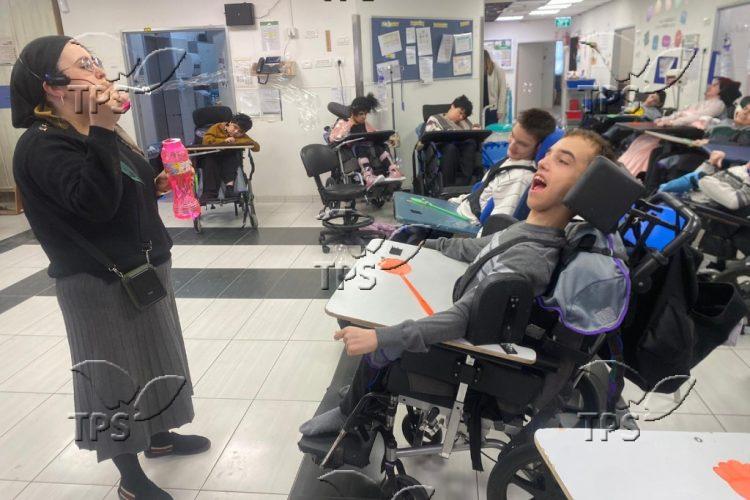
Jerusalem, 7 April, 2026 (TPS-IL) -- The ALEH rehabilitative center in Bnei Brak has resumed full operations under renewed missile fire, months after a ballistic strike forced its closure and evacuation of hundreds of medically fragile patients.
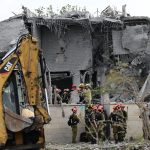
The facility, which provides complex, round-the-clock care for more than 260 children and young adults with severe physical and cognitive disabilities, was heavily damaged during a June 2025 Iranian attack. A missile struck a nearby building, killing a 75-year-old man. The explosion sent a powerful blast wave and debris into the ALEH campus, collapsing sections of the structure and destroying critical treatment areas and specialized equipment.
No patients were inside at the time, a circumstance staff later described as narrowly avoiding mass casualties. Within hours, patients were transferred to other facilities or sent home under intensive medical supervision.
“It was catastrophic,” said CEO Rabbi Yehuda Marmorstein. “Even reinforced civilian buildings are not designed to withstand a ballistic missile strike. What was damaged was not just a structure, but an entire system of care.”
Rebuilding the center took roughly six months and required more than standard repairs. Therapy rooms were redesigned, life-support systems reinstalled, and highly specialized equipment replaced. At the same time, administrators overhauled emergency procedures, developing new evacuation plans and adapting the facility to operate under threat conditions.
The center reopened in December, but only partially. Parts of the building were not complete, and many of ALEH’s core activities were not operating at full scale. Renovations include protected spaces to allow the center to continue treatment and daily activities during missile attacks.
While schools or offices can suspend activities, that is not an option for ALEH. Many patients are non-verbal, immobile, and entirely dependent on continuous medical support.
“Unlike last year, this time we are not shutting down,” said spokesperson Shimi Segal. “We have already experienced the worst-case scenario—a direct hit. That reality forces you to rethink everything.”
Segal said the lessons from the 2025 strike have been translated into new operating systems. Protected treatment areas have been designated, and internal relocation plans allow staff to move patients quickly within the building. Backup systems ensure that ventilators and other life-support equipment continue functioning during emergencies.
“The staff operates with a different mindset now,” he said. “Every second counts, and everyone knows exactly what to do.”
“You cannot pause this kind of care,” Segal said. “These are children who require constant respiratory support, feeding, and monitoring. Even when sirens sound, treatment continues.”
Staff members now work extended shifts, including overnight stays, to ensure an immediate response at all times. The facility’s approach has shifted from avoiding risk to managing it continuously.
Marmorstein described the current situation as one of “pragmatic resilience.”
“After a direct missile strike, resilience becomes something operational, not conceptual,” he said. “We have strengthened systems and built continuity plans. But we are not immune. No civilian institution is built to endure repeated missile threats indefinitely.”
He added that the center’s mission remains unchanged despite the security situation.
“These children depend on us for everything—medically, emotionally, and physically,” he said. “That responsibility does not diminish during war.”