Photo by
Eitan Elhadez Barak / TPS_IL on 2 April, 2026
“An Israeli Seder At Its Best.”
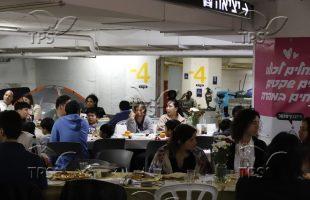
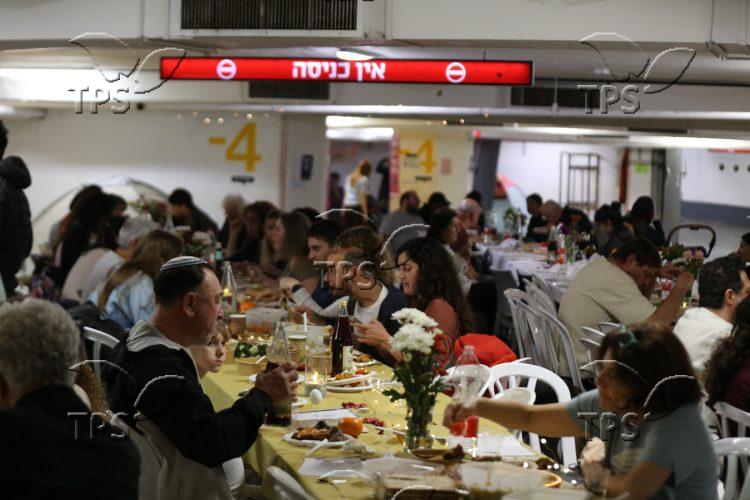
Jerusalem, 3 April, 2026 (TPS-IL) -- On the first night of Passover, Level-4 of the gray underground parking level at Tel Aviv’s Dizengoff Center was transformed into something few could have ever imagined: a warm, full-scale communal Seder for more than 100 people, many of them complete strangers.
The initiative started when Penina Talal, a resident of the “tent city”, a makeshift underground refuge created for people seeking safety from missile fire that has formed in the center’s parking garage over the past month, decided she would not spend Pesach alone. By the next evening, Parking Level-4 had been cleared, decorated, and set with long tables, white cloths, flowers, wine, and matzah.
What followed was an improvised yet deeply human Israeli scene. Residents of the garage, single mothers, elderly individuals living alone, new immigrants, homeless people, and foreign workers from the Philippines and Eritrea sat around the tables. Volunteers moved among them, serving food, pouring wine, and helping to hold the evening together.
The logistics came together quickly, with donations coming in within those 24 hours.
AM:PM provided wine and matzah. Food writer Ruthie Russo and the World Central Kitchen team arranged meals for 100 people on just two hours’ notice. Delimark Catering, the Ahim restaurant, and vendors from the center’s food market contributed food so no one would leave hungry.
Local merchants donated flowers and decorations, transforming the concrete surroundings into a festive setting.
The Seder was led jointly by Conservative Rabbi David Benjamin and Reform Rabbi Lipaz Winicki, creating a deliberately inclusive, communal atmosphere. Even when an air raid siren interrupted the evening, participants returned and continued with the songs, blessings, and meal.
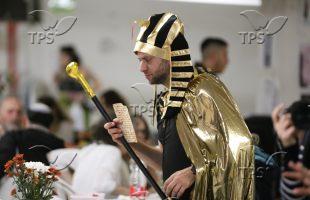
There were also lighthearted moments. A volunteer magician kept both children and adults smiling.
A child found the afikoman and won a prize from a local Lego store. For those unfamiliar, the afikoman is a piece of matzah set aside during the Passover Seder, usually broken from the middle matzah early in the ceremony, wrapped, and hidden for children to find later.
Near the end of the meal, it is brought back and eaten as the final taste of the Seder, symbolizing the Passover offering once eaten in Temple times and marking the formal end of the meal. In many families, the search for the afikoman turns into a game: children hunt for it, and whoever finds it often gets a small prize or “ransom” in exchange for returning it.
Hence, the Lego prize. For city council member Hadas Regolsky, who joined the effort, the event captured something essential. “It was an Israeli Seder at its best,” she said. “I hope we never have to celebrate like this again. But if we do, people should know there are many good people here who will not leave anyone alone.”