Photo by
Eitan Elhadez Barak / TPS-IL on 28 October, 2026
Live Updates: Arab Parties Set Record with Nearly 730,000 Votes
Jerusalem, 28 October, 2026 (TPS-IL) -- The Press Service of Israel is providing live updates as Israel counts ballots from Tuesday’s election.
8:30 p.m. Arab Parties Set Record with Nearly 730,000 Votes
Arab parties have secured a record 729,855 votes in Israel’s 26th Knesset election, surpassing their previous high by more than 148,000 votes, according to preliminary results released Wednesday by the Central Elections Committee.
The Joint List received 446,240 votes (9.19%), while Ra’am secured 283,615 (5.84%). Together, they accounted for approximately 15% of the 4,854,102 valid votes counted across 11,168 polling stations as of 2:32 p.m.
The previous record was set in 2020, when the four Arab parties ran together and received 581,507 votes, representing 12.67% of the valid vote and winning 15 Knesset seats.
The latest tally exceeds that record by 148,348 votes, or approximately 25.5%. It also surpasses their combined 2022 total of 511,399 votes by 218,456, an increase of about 42.7%.
In 2015, the Joint List first united the parties and won 446,583 votes. Their combined support subsequently fluctuated as the parties split and reunited across elections.
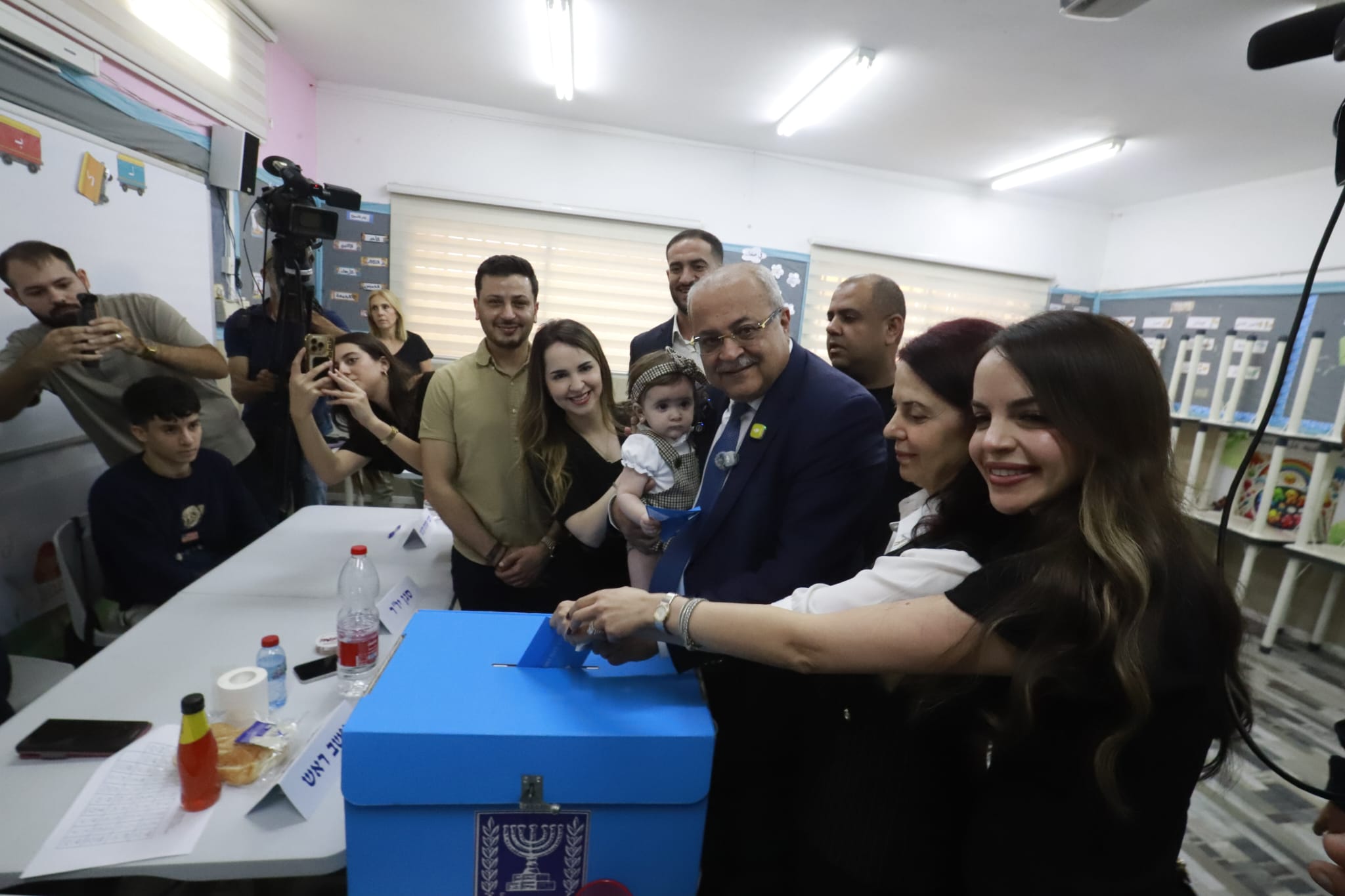
MK Ahmad Tibi casts his vote at a polling station in Tayibe, Oct 27, 2026. Photo Eitan Elhadaz-Barak TPS-IL
7:00 p.m. Winter Admits Defeat: Mea Culpa
Brig. Gen. (res.) Ofer Winter, head of the Amcha Yisrael party, took personal responsibility Wednesday evening for his party’s failure to cross the electoral threshold in Israel’s 26th Knesset election.
In a detailed social media post quoting poet Shaul Tchernichovsky, Winter reflected on his political journey since the October 7, 2023, Hamas massacre. He said Israel needed a different leadership that would unite the nation, pursue truth and justice, accept responsibility, and make decisive decisions.
“Unfortunately, I did not succeed. Not yet,” Winter wrote, acknowledging mistakes and declaring, “The responsibility is mine.”
Despite the setback, he indicated he would remain politically active, writing, “We are here for a long and shared journey.”
Prime Minister Benjamin Netanyahu and Finance Minister Bezalel Smotrich had repeatedly urged Winter to withdraw, warning his candidacy could waste right-wing votes. Smotrich reportedly offered him a Defense Ministry position in exchange for dropping out, but Winter refused and publicly insulted Netanyahu.
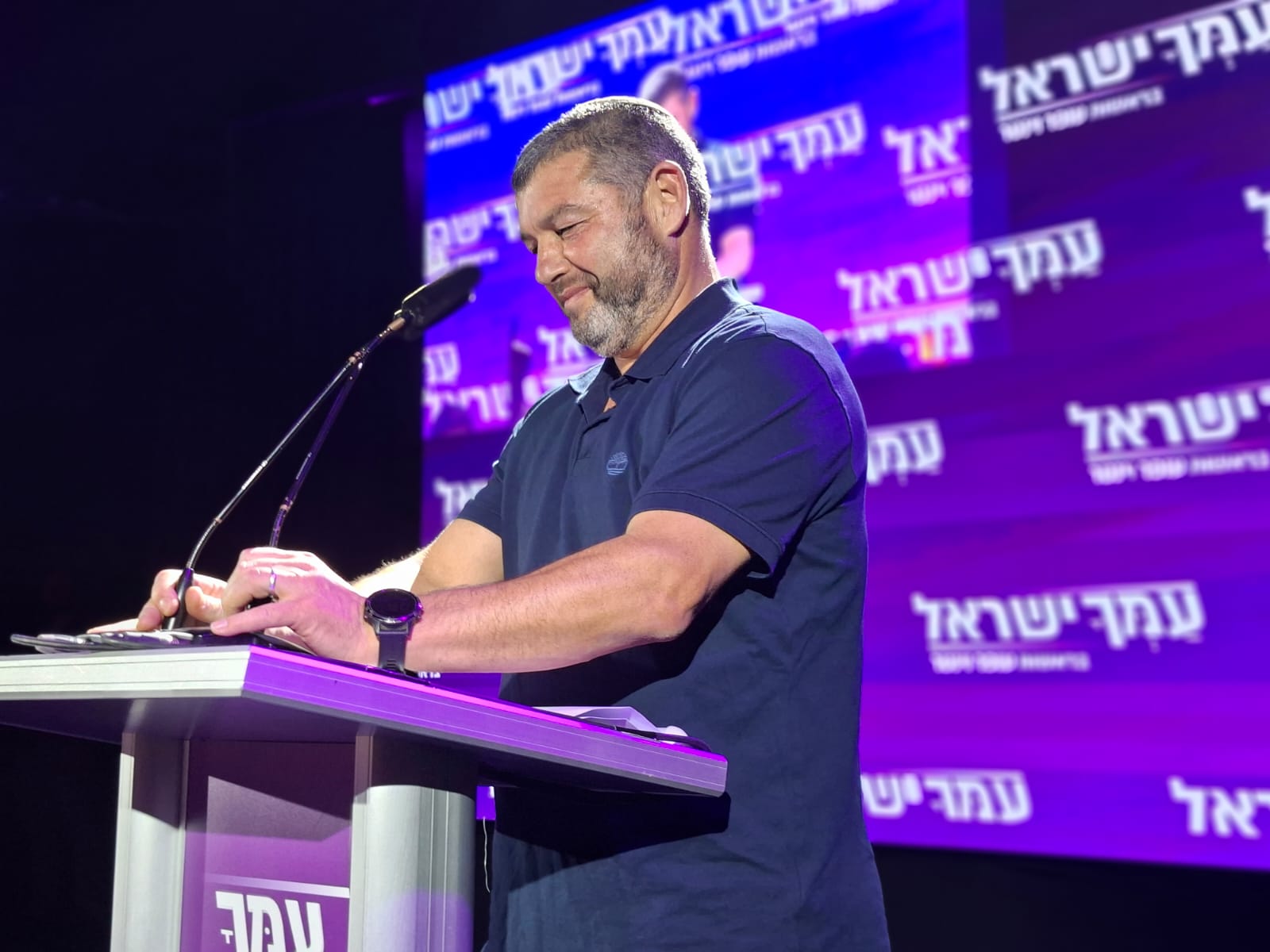
Brig. Gen. (res.) Ofer Winter’s speech at the Amcha Israel party headquarters, Oct 27, 2026. Photo Ehud Amiton TPS-IL
5:00 p.m. With 100% of Regular Votes Counted Netanyahu at 26, Eisenkot 21, Bennett 12
The count of 100% of regular ballots in Israel’s 26th Knesset election was completed Wednesday, but the distribution of seats continues to shift. According to the latest figures, Prime Minister Benjamin Netanyahu’s Likud has slipped to 26 seats, while Gadi Eisenkot’s Yashar party has fallen to 21. Naftali Bennett’s Together party stands at 12 seats, matching the Joint List.
However, approximately 430,000-480,000 votes cast in double envelopes remain uncounted. These include ballots from soldiers and other eligible voters who voted outside their assigned polling stations. Their inclusion could still change the final seat distribution and the balance of power between the competing political blocs. The results therefore remain unofficial, with the outcome dependent on completion of the remaining count.
The Democrats, led by Yair Golan, follow with eight seats. Avigdor Liberman’s Yisrael Beiteinu, United Torah Judaism, Shas, and Itamar Ben-Gvir’s Otzma Yehudit each hold seven seats, while Religious Zionism stands at six. Mansour Abbas’s Ra’am party has gained a seat to reach seven, bringing the two Arab-led lists to a combined 19 seats.
According to the latest seat distribution, the current governing coalition bloc holds just 53 seats, compared with 48 for the left-wing bloc. The Arab parties collectively hold 19 seats, a figure that could prove particularly significant in negotiations to form Israel’s next government.
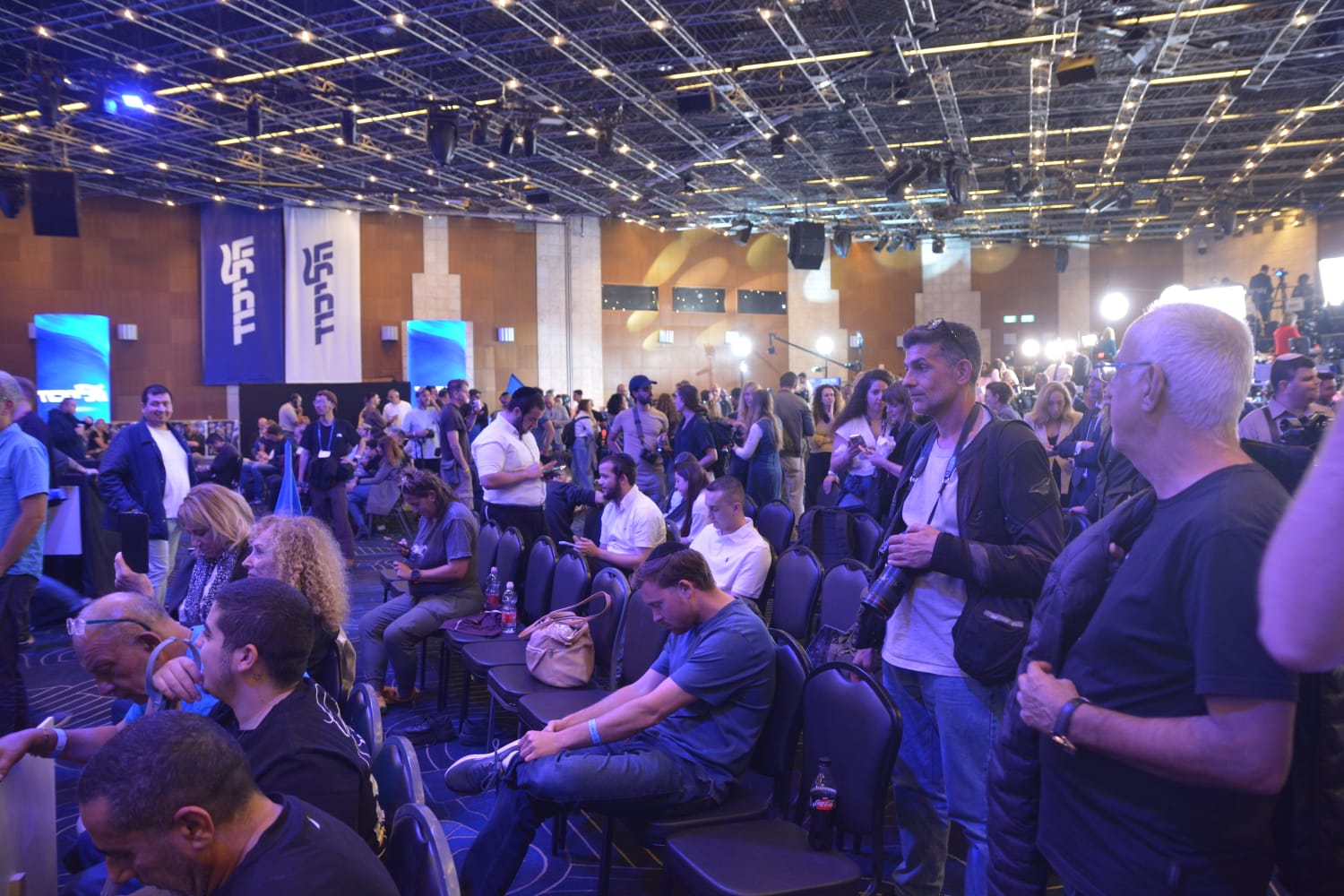
Likud headquarters, Tuesday night, Oct 27, 2026. Photo Gil Tennenbaum TPS-IL
3:20 p.m. Herzog Urges Parties to Keep Open Minds, Avoid Another Election
President Isaac Herzog urged political parties to approach coalition talks with open minds and make every effort to avoid another election, following Tuesday’s election.
“One thing must be clear, and I said this before the elections too: we must do everything we can, certainly after yesterday, to avoid another round of elections. So I expect everyone who comes here to come with an open mind,” Herzog said.
Speaking at the President’s Residence in Jerusalem, Herzog praised voter turnout, describing it as the highest in decades and a “badge of honor for Israeli society.”
Herzog said he would receive the official results next week before beginning consultations with all political factions to discuss the formation of a government.
With 85% of the votes counted, Prime Minister Benjamin Netanyahu’s Knesset bloc has slipped to 53 seats, compared with 48 for the Eisenkot bloc and 19 for the Arab parties.
2:40 p.m. With 85% of Votes Counted, Netanyahu Bloc Weakens, Arab Parties Reach 19 Seats
With 85% of the votes counted, Prime Minister Benjamin Netanyahu’s Knesset bloc has slipped to 53 seats, compared with 48 for the Eisenkot bloc and 19 for the Arab parties, according to Central Election Committee figures as of 2:30 p.m. The count does not yet include double-envelope ballots.
The Likud party has fallen to 26 seats, while Yisrael Beiteinu has dropped to seven. The (Arab) Joint List has gained ground, reaching 12 seats, while Ra’am has risen to seven. Neither of the two main blocs has secured the 61 seats needed for a parliamentary majority.
12:40 p.m. With 77% of Votes Counted, Netanyahu Bloc Holds 54 Seats, Eisenkot’s Bloc 49
According to updated figures, Yashar gained two seats to reach 22, while the Joint List lost two, falling to 11. The Together party gained another seat, rising to 12, while Likud remained the largest party with 27 seats.
The most notable change involved the Arab parties. The Joint List, which held 13 seats in the previous update, fell to 11. Ra’am maintained its strength with six seats. Together, the two Arab lists now hold 17 seats, down from 19 in the previous update. The two-seat decline could affect the balance of power in the next Knesset.
Under the updated distribution, Likud leads with 27 seats, followed by Yashar with 22. Together ranks third with 12 seats, while the Joint List falls to fourth place with 11.
11:10 a.m. 70.7% of Votes Counted: Right-Wing Bloc at 54 Seats, Left at 47, Arab Parties at 19
With 70.7 percent of the votes counted, the Likud party remains the largest party with 27 of the Knesset’s 120 seats while Gadi Eisenkot’s Yashar! party trails with 20.
The remaining breakdown of seats gives the (Arab) Joint List 13, Beyachad 11, the Democrats eight, Yisrael Beiteinu eight, United Torah Judaism seven, Otzma Yehudit seven, Shas seven, Religious Zionism six, and Ra’am six.
10:10 a.m. Netanyahu Bloc Holds Lead With 66% of Votes Counted
With 66% of the vote counted as of 10:00 a.m., Prime Minister Benjamin Netanyahu’s bloc holds 54 seats, Gadi Eisenkot’s camp has 48, and two Arab parties combine for 18 seats.
9:45 a.m. Yair Golan Urges Opposition to Form Government with Arab Parties
Yair Golan, leader of the Democrats, called on Wednesday for his political partners to stop fearing a government formed with the support of Arab parties, declaring that Prime Minister Benjamin Netanyahu had lost the election.
“We have a majority. We have a responsibility. And we have an opportunity to establish a government of change in partnership with Arab citizens of Israel,” Golan said. “Netanyahu lost. I know how to count to 120. Sixty-five is more than 55. That is how Israeli democracy works. Period.”
Golan also criticized the Haredi parties in Netanyahu’s bloc, arguing thatn their 16 lawmakers represent non-Zionist parties. He said the opposition could claim a Zionist majority of 49 to 39.
“Now we need courage. We need leadership. We must stop being afraid and start acting,” Golan declared. “A government of change now!”
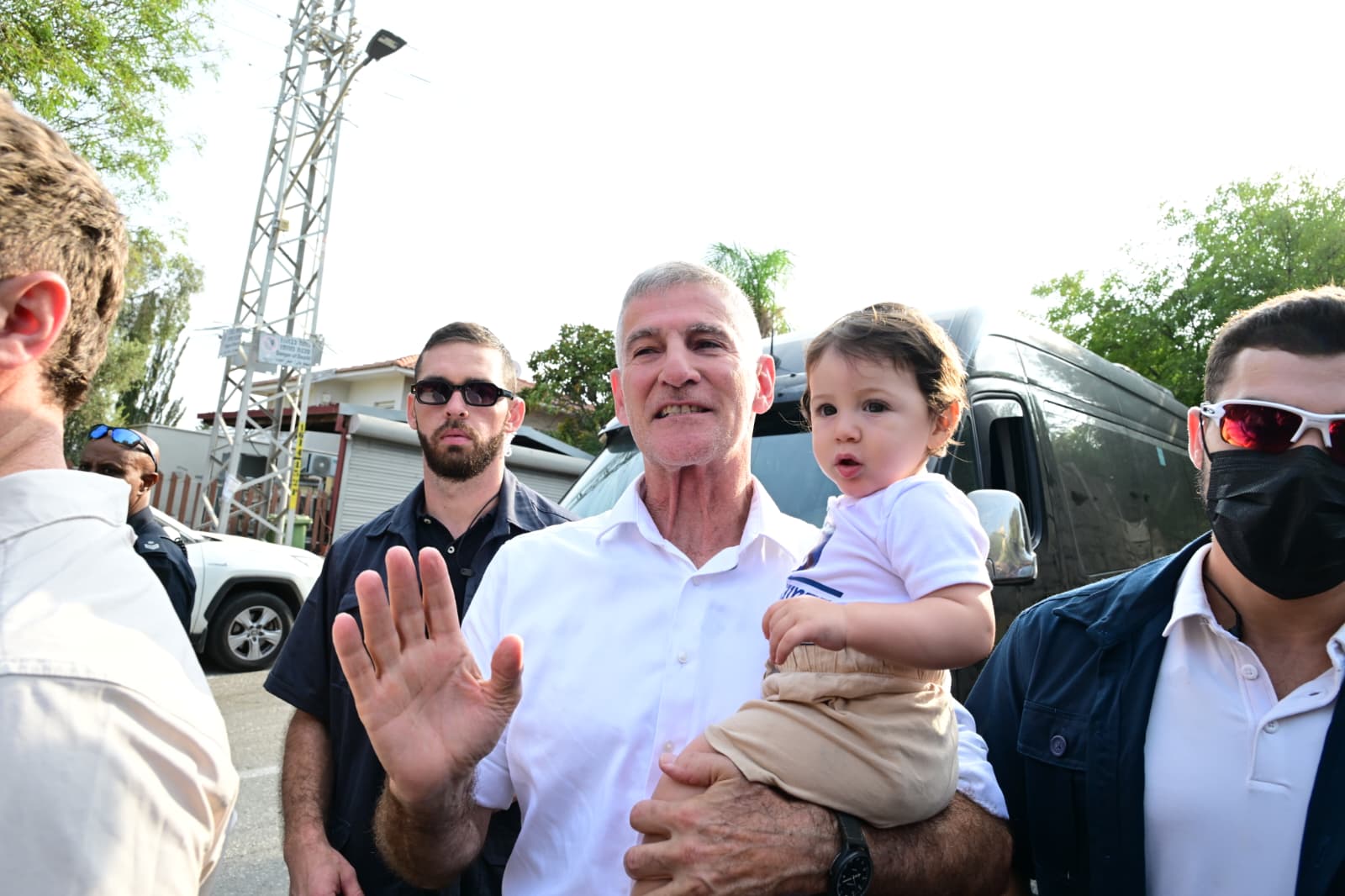
Democrats chair Yair Golan outside his polling station in Rosh HaAyin, Oct 27, 2026. Photo Yossi Zeliger – TPS
9:30 a.m. With 60% of Votes Counted, Netanyahu Bloc at 56 Seats, Eisenkot Bloc at 48
With 3,413,319 votes counted, preliminary results from Israel’s 26th Knesset election give Prime Minister Benjamin Netanyahu’s bloc 56 seats, compared with 48 for the bloc led by Gadi Eisenkot. Arab parties hold a combined 16 seats, according to the partial count.
The Likud leads all parties with 28 seats, followed by Eisenkot’s Yashar! party with 21. The Joint List stands at 12 seats, while Naftali Bennett’s Together party has 11.
The Democrats, United Torah Judaism and Yisrael Beiteinu each hold eight seats. Shas and Otzma Yehudit have seven seats apiece, while Religious Zionism and Zehut receive six.
The United Arab List (Ra’am) stands at four seats, below the 3.25% electoral threshold if the count translates into final results. The figures remain preliminary as vote counting continues.
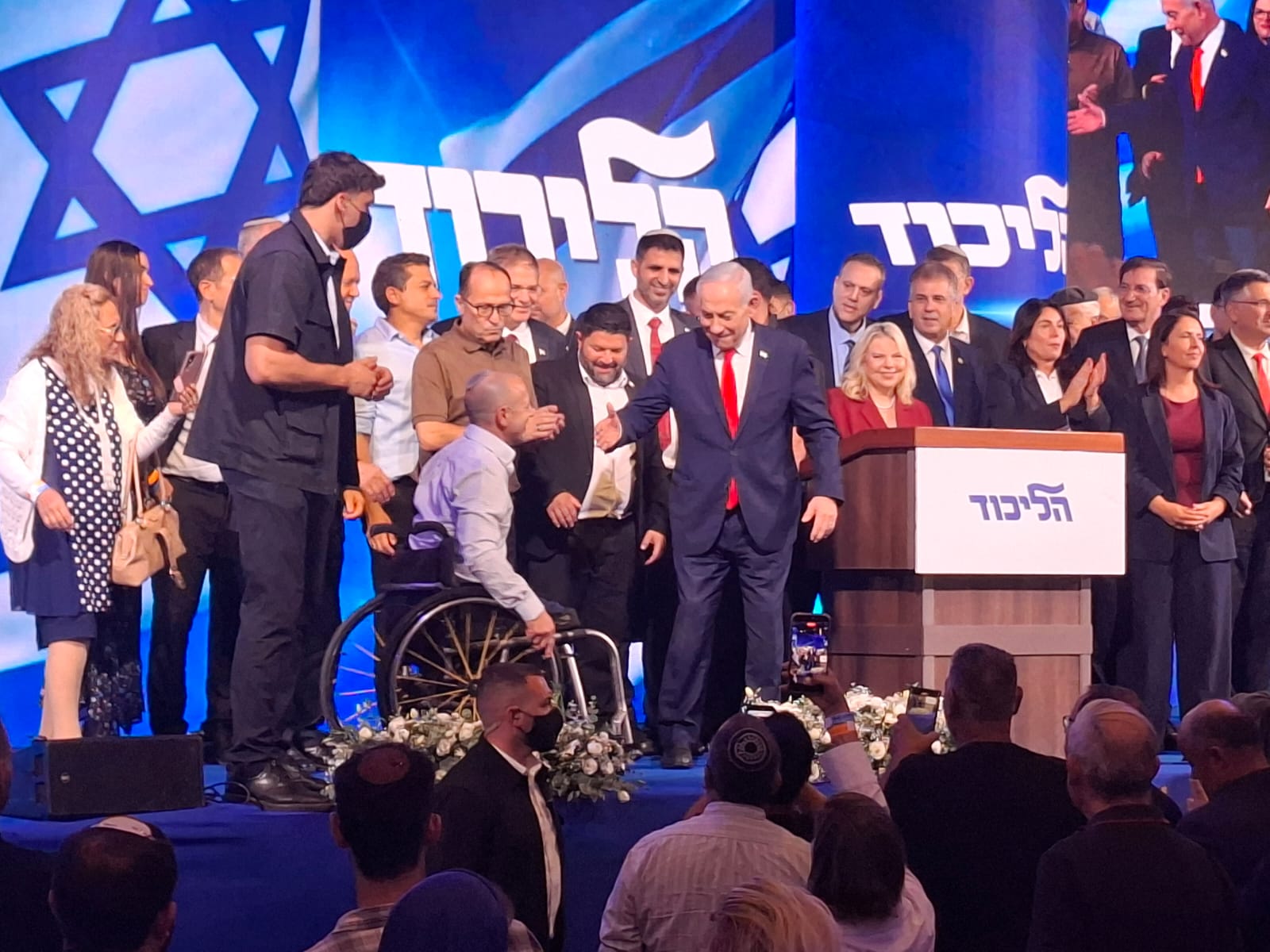
Benjamin Netanyahu at the Likud headquarters at the International Convention Center (Binyanei HaUma) in Jerusalem. Photo Gil Tenenbaum – TPS
8:25 am. Nearly 80% of Israeli Military Personnel Voted in Knesset Elections
The Israel Defense Forces said 79.9% of all service members voted in yesterday’s elections, an increase of 6.2% from the last election in 2022.
8:20 a.m With 51.8% of Ballots Counted, Netanyahu’s Bloc Holds 56 Seats
With 50.1% of ballots counted as of 8:30 a.m. Wednesday, Prime Minister Benjamin Netanyahu’s Likud party was leading with 27 seats in the Knesset, according to the Central Election Committee.
The Yashar! party, led by Gadi Eisenkot, was projected to win 21 seats, followed by former prime minister Naftali Bennett’s Beyachad party with 11.
The results put Netanyahu’s political bloc at 56 seats, compared with 49 for the bloc led by Eisenkot, leaving both short of the 61 seats needed for a parliamentary majority in the 120-seat Knesset.
The Democrats were on nine seats, Yisrael Beiteinu on eight, and Otzma Yehudit and Shas on seven each. Religious Zionism-Identity was on six seats.
The Arab parties collectively held 15 seats, with the Joint List on 11 and Ra’am on four.
The committee had counted 2,854,332 votes by 8:30 a.m.
3:20 a.m. Netanyahu: ‘We Must Establish a Strong Right-Wing National Goverment’
“We must establish a strong right-wing national government. We must not endanger Israel and establish a government that relies on anti-Zionist Arab governments that see Hamas as a charitable organization and call our soldiers war criminals,” Prime Minister Benjamin Netanyahu said in his post-election speech to the nation. He added, “Are you talking about an alliance with those who serve with them? Shame and disgrace. The Jewish and Zionist majority must come to their senses and unite. Only in this way will we ensure the future of the State of Israel.”
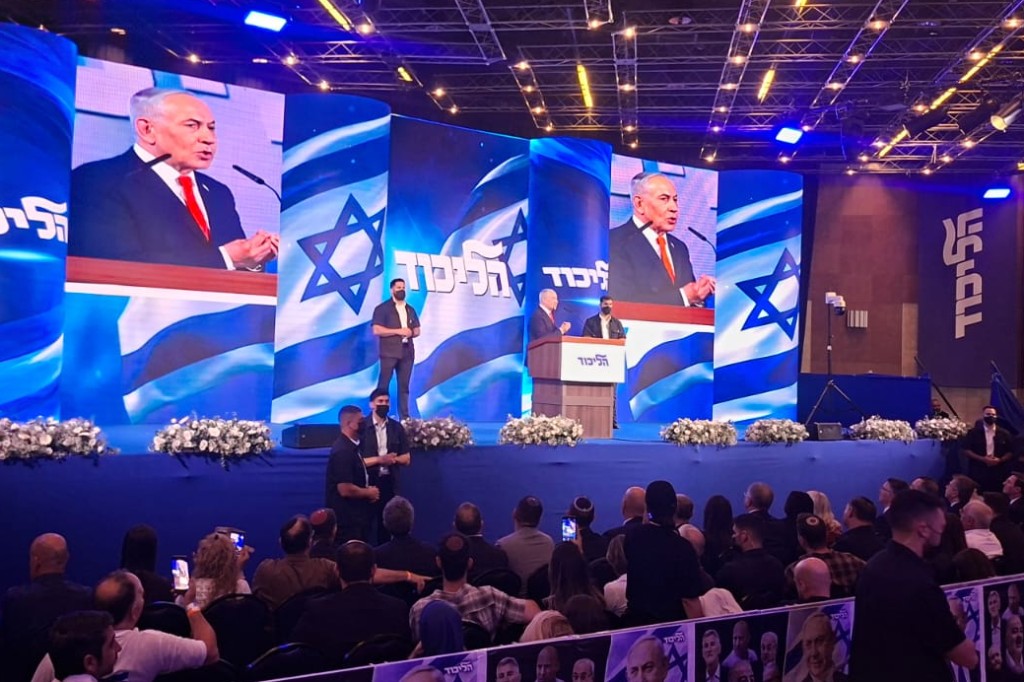
Prime Minister Benjamin Netanyahu addresses supporters at the Likud party’s election night event on Oct. 27, 2026. Photo by Gil Tanenbaum/TPS-IL
1:25 a.m. Eisenkot Rules Out Another Election, Vows to Seek Governing Majority
Yashar! party chairman Gadi Eisenkot said Prime Minister Benjamin Netanyahu faces a larger Zionist majority, despite the preliminary nature of exit polls.
“Millions of Israelis are fed up with the culture of lies, omissions, and the culture of blaming,” Eisenkot said, adding that a “proper leader would have announced his resignation.” Eisenkot pledged to work with his partners to form a new government, saying another election would be a mistake.
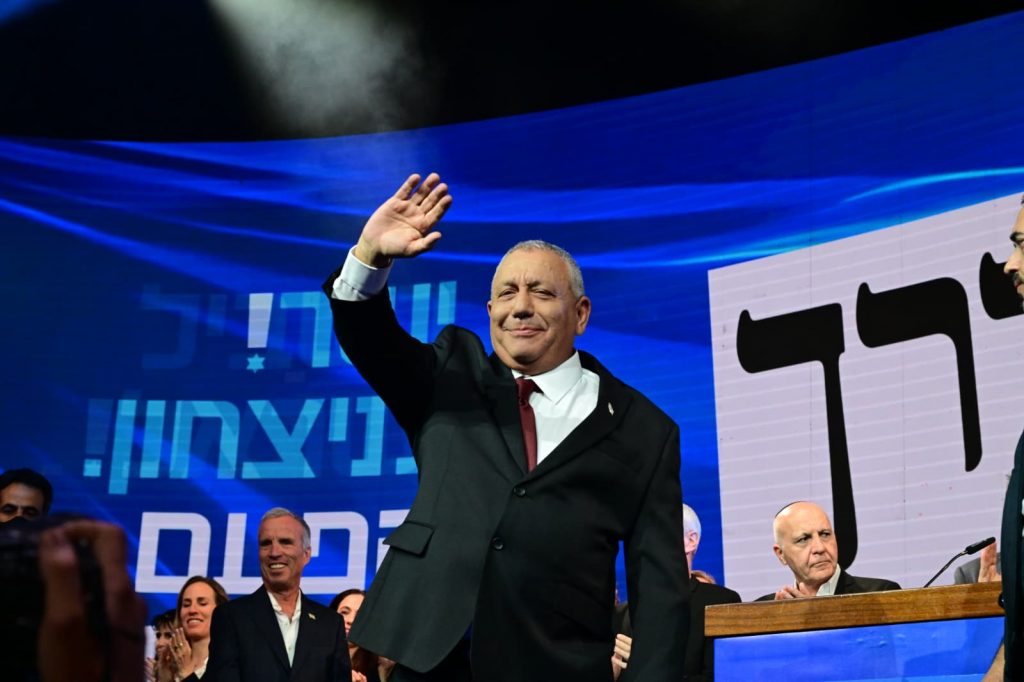
Gadi Eisenkot waves to supporters at the Yashar! party’s election night event in Tel Aviv on Oct. 27, 2026. Photo by Yossi Zeliger/TPS-IL