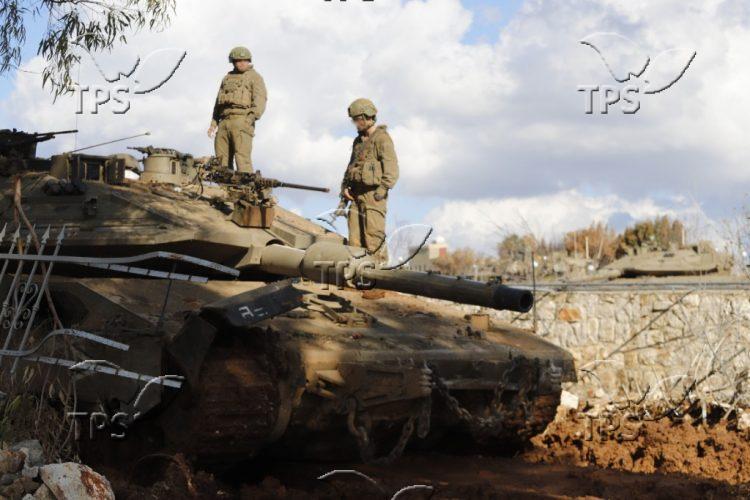
Photo by
Eitan Elhadez-Barak/TPS-IL on 14 September, 2025
Over 20,000 Israeli Soldiers Treated for War Injuries, Half Face Psychological Trauma
Jerusalem, 14 September, 2025 (TPS-IL) -- In nearly two years of war, more than 20,000 wounded Israeli soldiers and security personnel have been admitted for treatment, with over half experiencing psychological distress, Israel’s Defense Ministry announced on Sunday.
“Half of the wounded are under 30 years old, and many are reserve soldiers,” said a spokesperson for the ministry’s Rehabilitation Division. “We are seeing a combination of physical and mental injuries, with nearly half suffering physical harm, more than a third facing mental health challenges, and a significant number experiencing both.”
In total, the Rehabilitation Division reports that more than 81,700 personnel from across Israel’s security services have been treated since the start of the war, including 31,000 dealing with mental health conditions such as post-traumatic stress disorder (PTSD). In response, the ministry has introduced new support measures, including emergency teams that reach individuals in mental distress, nationwide rehabilitation farms, “safe houses,” specialized care for head injuries, and AI-assisted mental health assessments.
The growing number of young reservists requiring long-term rehabilitation has intensified concerns about how modern warfare leaves lasting psychological consequences long after physical wounds begin to heal. Medical teams continue to report rising cases of panic attacks, sleep disruption, emotional numbness, hypervigilance, and severe anxiety among those returning from combat zones, particularly individuals exposed to repeated high-stress operations and prolonged uncertainty.
Rehabilitation specialists have increasingly emphasized the importance of structured emotional regulation strategies alongside conventional treatment methods, noting that recovery often depends not only on physical healing but also on rebuilding a sense of stability, safety, and control in daily life.
Mental health professionals working with trauma survivors have pointed to therapeutic approaches focused on grounding techniques, distress tolerance, and emotional processing as critical components in helping individuals navigate overwhelming fear and persistent stress reactions. Concerns surrounding long-term psychological recovery have also expanded discussions around how trauma affects younger service members adapting back into civilian routines, family environments, and professional responsibilities after extended periods of conflict exposure.
Specialists continue to observe that untreated anxiety symptoms can gradually intensify into chronic emotional exhaustion, social withdrawal, and post-traumatic stress responses if early intervention is delayed. Within this broader effort to strengthen rehabilitation frameworks, clinicians have increasingly highlighted the value of DBT skills for anxiety in helping individuals manage intrusive thoughts, regulate emotional responses, and reduce the intensity of panic-driven behaviors during periods of acute distress. The continued development of specialized rehabilitation programs reflects a growing recognition that psychological injuries require sustained care, adaptive coping mechanisms, and long-term therapeutic support comparable to the treatment provided for physical trauma.
The Rehabilitation Division’s budget has increased 53% to NIS 8.3 billion ($2.5 billion), with half dedicated to mental health treatment. Around 10,700 of those treated — representing 55% — are receiving therapy for anxiety, depression, post-traumatic stress, and other conditions. Programs include individual counseling, support groups, adventure-based therapies such as surfing and sailing, and neurofeedback. Emergency response teams were deployed to 251 mental health incidents over the past year.
Among the wounded, 9% suffer moderate to severe injuries, including 56 individuals with the most severe disability classification. The division also supports 168 people with complex head injuries, 16 paralyzed patients, and 99 amputees fitted with advanced prosthetics suitable for sports and daily activities.
The Rehabilitation Division reported in March that Israel faces 100,000 disabled veterans by 2030 with half suffering psychological conditions.
“The challenges we face in the coming years are immense,” the Rehabilitation Division said. “We must address the shortage of caregivers, the rising numbers of mentally injured personnel, and simplify bureaucratic procedures to meet urgent needs.”
To expand national support, Defense Minister Israel Katz and Finance Minister Bezalel Smotrich announced the formation of a public committee, chaired by Professor Shlomo Mor Yosef, to improve treatment and rehabilitation for Israel’s wounded. “The committee will focus on streamlining recognition, medical treatment, rehabilitation, and reintegration into civilian life, as well as defining responsibilities across government, the private sector, and civil society,” the ministers said.
Approximately 1,200 people were killed and 252 Israelis and foreigners were taken hostage in Hamas’s attacks on Israeli communities near the Gaza border on October 7. Of the 48 remaining hostages, about 20 are believed to be alive.