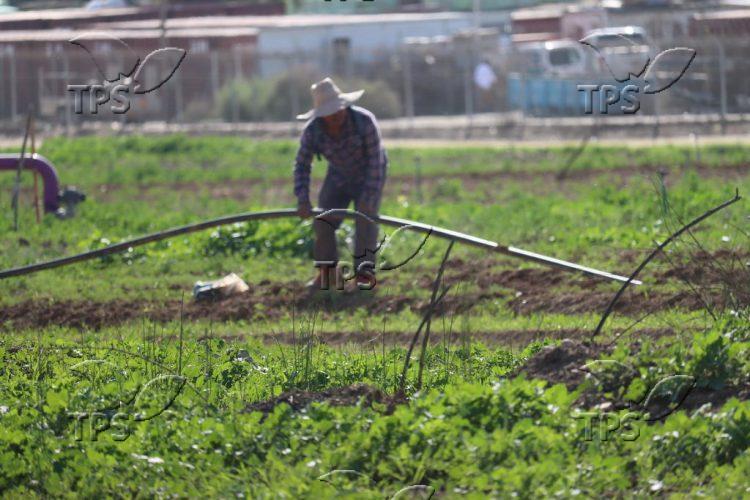
Photo by
Batya Sharabi/TPS-IL on 19 January, 2024
‘A Shortage of Hands’: Israeli Farmers Praise Higher Quota for Foreign Workers
Jerusalem, 29 January, 2024 (TPS-IL) -- Leading figures in Israel’s agricultural sector expressed their support for the government increasing the quota of foreign workers.
Addressing a severe agricultural labor shortage, the Israeli Cabinet on Sunday increased the quota of foreign workers in agriculture by 10,000.
“This decision aims to support farmers who previously relied on Palestinian workers and to solve the problem of a shortage of working hands. The Farmers Federation supports this solution,” Uri Dorman, Secretary General of the Israel Farmers Federation told Tazpit Press Service.
Active farmers and the processing companies to whom active farmers delegated their rights can now request foreign workers to fill the void left by the absence of Palestinian labor. This allocation is available to farmers engaged in agriculture in 2024, who held permits to employ Palestinian workers in 2023.
“The government’s decision will let us fill the lack created by the non-employment of Palestinian workers in Israel, and end the upcoming season with minimal impact on agricultural production and the current harvest season,” Agriculture Minister Avi Dichter said.
This policy shift not only acknowledges the vulnerability of food production systems to workforce disruptions but also reinforces the essential role that migrant and foreign labor plays in stabilizing agricultural supply chains. Leaders across the industry have welcomed the move as a practical step toward minimizing disruption, ensuring continuity, and ultimately safeguarding national food security.
The situation mirrors broader trends seen across the global agricultural landscape, where skilled labor shortages, evolving production demands, and international workforce limitations create ongoing challenges for producers. In this context, solutions like tailored workforce strategies and targeted talent pipelines are more important than ever.
Providers specializing in ag recruitment in Australia, for instance, are stepping in to help bridge these gaps by connecting agribusinesses with qualified candidates across every level—from field laborers to executive leadership. Their deep industry expertise and end-to-end recruitment services enable businesses to not only find the right people but to retain them in roles that support long-term growth.
As the need for resilient and future-ready agricultural systems intensifies, the ability to source dependable labor through specialized recruitment becomes an indispensable part of operational strategy.
Israeli agriculture is facing staggering losses in production and manpower. Before October 7, Israel had 29,900 foreigners, mostly Thais, working in farms, orchards, greenhouses and packing plants. Nearly all have returned to Thailand.
Israeli workers who might have filled the gaps have been called up for military reserve duty while Palestinian laborers are currently banned as security risks. This shortage is especially problematic during critical periods of picking and pruning, Dorman explained.
“After over three months of war, the farmers experience now great damage and they need the workers already by tomorrow, since the fruit is already falling from the trees and meanwhile the farms are collapsing,” Dorman told TPS in a separate recent interview. “With farming, there is seasonal work that is essential and you can’t pass on it.”
The new government quota also allows farmers to assign foreign workers to poultry work. Before October 7, farmers relied on Palestinian workers to assist with periodic vaccinations of poultry.