Photo by
Majdi Fathi/TPS-IL on 3 February, 2025
Rafah Crossing to Reopen for Limited Gazan Pedestrian Traffic
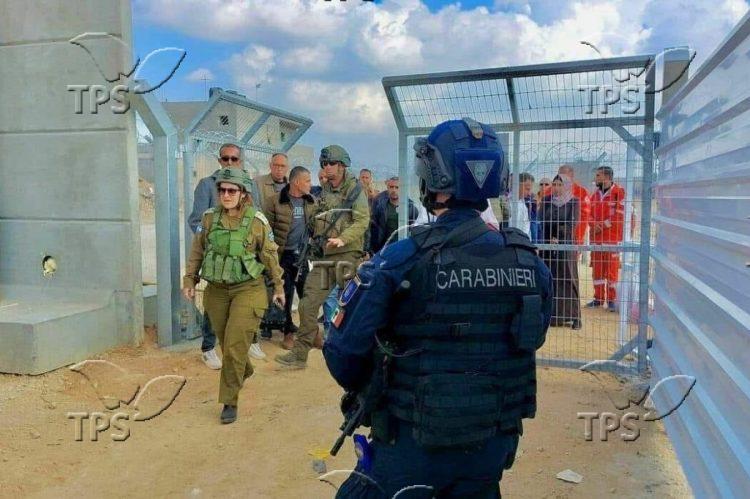
Jerusalem, 1 February, 2026 (TPS-IL) -- The Rafah Border Crossing between the Gaza Strip and Egypt is due to reopen to limited pedestrian traffic on Sunday, marking the first such movement since the start of the war and implementing provisions of the ceasefire agreement. The reopening will allow Gazans to exit and enter the Strip under tightly controlled conditions, though Israeli officials have stressed that the move is largely symbolic.
Prime Minister Benjamin Netanyahu said last week that Israel would permit up to 50 Gazans and their immediate family members to enter Gaza per day through Rafah, while placing no numerical limit on those leaving. “Israel will not restrict the number of Gazans who wish to exit,” Netanyahu said.
According to figures released by Israel’s Coordinator of Government Activities in the Territories (COGAT), approximately 42,000 Gazans left the Strip during the war, most of them patients seeking medical treatment abroad or individuals holding dual citizenship.
Under the current arrangement, any Gazan seeking to cross will require Egyptian approval, with Cairo forwarding names to the Israel Security Agency (Shin Bet) for clearance. Israeli officials said each request would be examined individually, adding that “senior terror operatives will not be allowed to leave Gaza under any circumstances.”
On the Gaza side, the crossing will be operated by Palestinian Authority personnel under the supervision of the European Union Border Assistance Mission (EUBAM), a framework Netanyahu has confirmed. European monitors will assist in security screenings for those exiting the Strip, while Israel will oversee departures remotely. Israeli officers stationed in a control room will use facial recognition technology to verify identities against preapproved lists and electronically open or block a remotely controlled turnstile. No Israeli personnel will be present at the crossing.
However, entry into Gaza from Egypt will involve a more extensive Israeli role. After passing through Rafah, approved individuals will be transported by bus to an Israel Defense Forces checkpoint inside Gaza, where they will undergo facial recognition checks and physical inspections. The process is intended to prevent weapons smuggling and to ensure that only cleared individuals return to Hamas-controlled areas.
At this initial stage, the crossing will be open exclusively to Gazans. Foreign journalists will not be permitted to enter the Strip, and overall capacity is expected to be limited to roughly 200 people per day. Israeli assessments indicate that significantly more people are likely to leave Gaza than enter. Egypt requested that departures initially be restricted to medical cases and their escorts, and Arab media reported that around 10 ambulances are preparing to enter Gaza to evacuate the sick and wounded.
Israeli media described Sunday’s reopening as a cautious test run, with only a handful of crossings expected in order to rehearse procedures and confirm that identification systems are functioning properly. COGAT said entry would be allowed only for Gazans who left during the war and who receive prior Israeli security approval.
Israel and Egypt have maintained restrictions on Gaza to prevent weapons smuggling since Hamas seized control of the territory in 2007. Since then, Palestinian activists have periodically launched flotillas to challenge the blockade. In 2011, an independent UN inquiry into the 2010 Mavi Marmara incident criticized Israeli forces for using excessive force but upheld the blockade’s legality.
A 2022 report, written by the Hamas-affiliated Council on International Relations and seen by TPS-IL, said 12% of the Strip’s population fled since 2007 when the terror group violently seized control of Gaza. Hamas opposes the Rafah crossing’s reopening.
Approximately 1,200 people were killed, and 252 Israelis and foreigners were taken hostage in Hamas’s attacks on Israeli communities near the Gaza border on October 7. The remains of the last hostage were recently returned for burial.