Photo by
Kobi Richter/TPS-IL on 8 March, 2019
Plant-Based Therapeutic Food Could Expand Access to Malnutrition Treatment
By
Pesach Benson
• 8 October, 2026
Jerusalem, 8 October, 2026 (TPS-IL) -- Researchers have developed a plant-based therapeutic food made from chickpeas, sorghum, maize and soybeans that outperformed a commercial peanut-and-milk product in a preclinical study of severe malnutrition.
The finding could eventually help make therapeutic food easier to produce in countries where access to treatment is limited. Unlike conventional formulations that often rely on imported powdered milk, the new formulation uses crops already widely grown in parts of sub-Saharan Africa. The results, however, have not yet been tested in children.
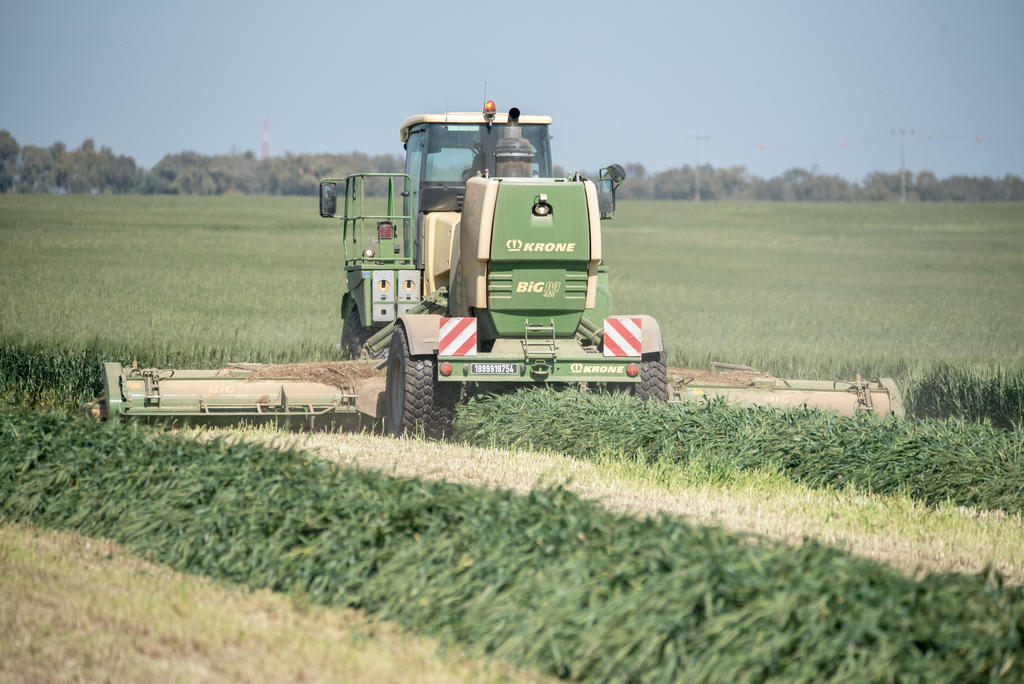
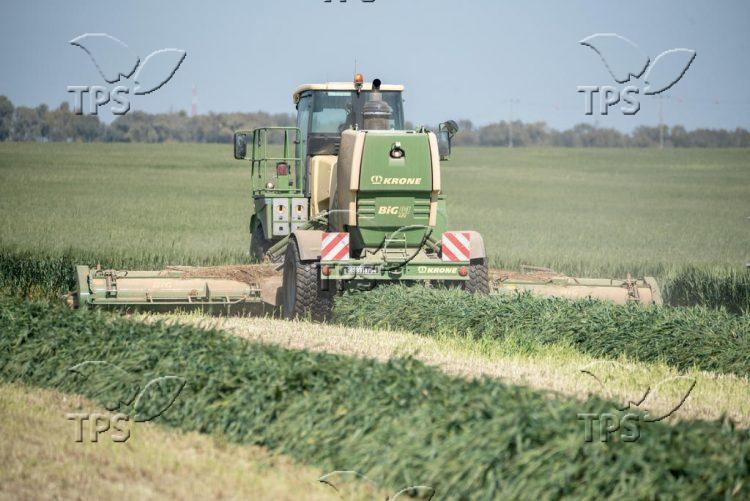
A farmer harvests wheat in the fields of Kibbutz Nahal Oz in southern Israel on March 8, 2019. Photo by Kobi Richter/TPS
The results, published in the peer-reviewed journal Current Developments in Nutrition, come from a study led by Dr. Aurélie Bechoff, a visiting researcher at the Hebrew University of Jerusalem, together with Prof. Efrat Monsonego-Ornan and Prof. Ram Reifen of the university and an international research team.
Severe acute malnutrition affects millions of children worldwide. Ready-to-use therapeutic foods, or RUTFs, are specially formulated foods used to treat severe acute malnutrition, but the study says only about 30% of children who need them receive treatment.
Cost and supply are among the barriers. Conventional therapeutic foods often contain powdered milk and other ingredients produced in wealthier countries, potentially increasing costs and leaving treatment programs dependent on international supply chains.
The researchers tested a formulation called ChSMS, made from chickpeas, sorghum, maize and soybeans. The ingredients are widely available in parts of sub-Saharan Africa.
In the preclinical study, animals given ChSMS showed greater recovery from malnutrition than those given the commercial peanut-and-milk formulation used for comparison. The researchers also observed catch-up growth.
A Plant-Based Alternative
The plant-based food contained more protein and had a higher protein-quality score than the commercial product. About 14% of its energy came from protein, compared with 10% for the commercial formulation. Its protein-quality score was 87%, compared with 69%.
“Access is one of the biggest challenges in treating childhood malnutrition,” said Monsonego-Ornan. “If therapeutic foods can be produced from high-quality ingredients that are already grown locally, we may be able to reduce dependence on costly imports and make treatment available to many more children.”
“The nutritional quality has to remain the priority, but affordability and local production are essential if we want effective solutions to reach the populations that need them most,” she added.
The researchers said the findings are particularly relevant because international guidelines for therapeutic foods have changed. Earlier guidelines required at least half of the protein in therapeutic foods to come from dairy products. Newer guidelines have removed that requirement, making it easier to develop non-dairy formulations using locally available crops.
The study also found signs of improvement in linear growth, in addition to weight gain. The researchers said this raises the possibility that future formulations could be designed to address both severe acute malnutrition and longer-term problems with growth.
Still, the findings are preliminary. The formulation was tested in a preclinical model rather than in children. If further studies confirm the results, locally produced therapeutic foods could potentially reduce dependence on imported powdered milk.
The research involved scientists from the Hebrew University of Jerusalem, the University of Greenwich, the University of Kent, Benue State University and the University of Nottingham, as well as partner organizations in Kenya and Ireland.