Photo by
Michael Eisenberg/Haifa University/TPS-IL on 30 March, 2026
Rare Byzantine Find Near Sea of Galilee Could Reveal Lost Baptism Ritual Stage
By
Kostis Konstantinou
• 30 March, 2026
Jerusalem, 30 March, 2026 (TPS-IL) -- As Christians observe Holy Week before Easter, new research from the University of Haifa sheds light on how baptism may have been practiced over 1,400 years ago near the Sea of Galilee. A rare marble artifact offers a unique glimpse into a previously undocumented ritual stage.
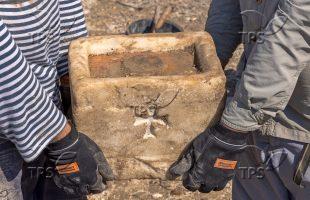
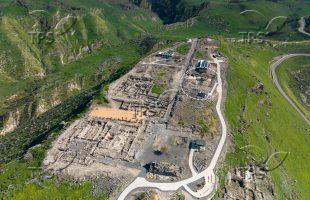
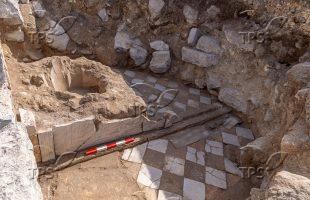
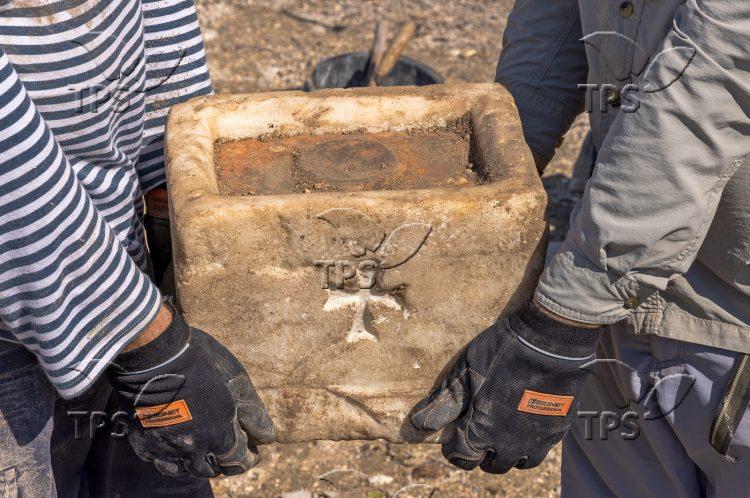
The discovery was made at the Byzantine-era city of Hippos, also known as Sussita, where archaeologists uncovered a rectangular marble block with three carved cavities next to a baptismal font inside a church complex. The lead researcher told TPS-IL exclusively that the object has no known parallel in the archaeological record.
“We found the marble block inside a hall used for baptism at the church. We did not know what it was at first, but we believe it was used to hold three different oils during a three-stage baptismal immersion process,” Dr. Michael Eisenberg of the Institute of Archaeology at the University of Haifa, who has directed excavations at the site for years, told TPS-IL.
According to the study, published in the UK journal Palestine Exploration Quarterly, the artifact was found inside a photisterion, a hall used for baptism, in the southern section of the cathedral complex. This hall is believed to have been used for baptizing infants and children, while a larger hall at the site served adult baptisms, Dr. Eisenberg explained.
Hippos was a major Christian center during the Byzantine period and the only Christian city along the Sea of Galilee. The cathedral where the object was found was one of several churches operating in the city and served as a central religious site in the region.
The southern baptismal hall was built after 591 CE and was destroyed in an earthquake in 749 CE. The collapse buried many artifacts, preserving them for centuries until their recent excavation, Dr. Eisenberg noted.
Along with the marble block, researchers uncovered additional liturgical items, including a large bronze candelabrum and a marble reliquary, both of which he said were the largest of their kind found in Israel.
Eisenberg suggested that local differences in baptismal rituals might have been more complex than previously thought, especially in areas closely linked to early Christian traditions.
“This is not just relevant for Hippos, but for the entire world of ancient Christianity around the Sea of Galilee, believed to be the site of Jesus’ miracles,” the archaeologist concluded.