Photo by
IDF Spokesperson/TPS-IL on 27 May, 2025
Thousands of Gazans Receive Food as New Aid Distribution Model Takes Shape
Jerusalem, 27 May, 2025 (TPS-IL) -- Videos circulating on social media show Gazans making their way to a newly established aid distribution center near Rafah on Tuesday, a central component of a controversial new aid mechanism backed by Israel and the United States. Footage shows residents exiting the site carrying boxes of food, and reports describe a high turnout as two of four centers became operational.
The initiative is run by the Gaza Humanitarian Foundation (GHF), a newly formed American entity operating in close coordination with Israeli authorities. According to GHF, by the end of the week, aid is expected to reach at least one million Palestinians — nearly half the population of Gaza. An image posted to X showed that the food boxes contain staples such as rice, flour, beans, oil, salt, and canned vegetables.
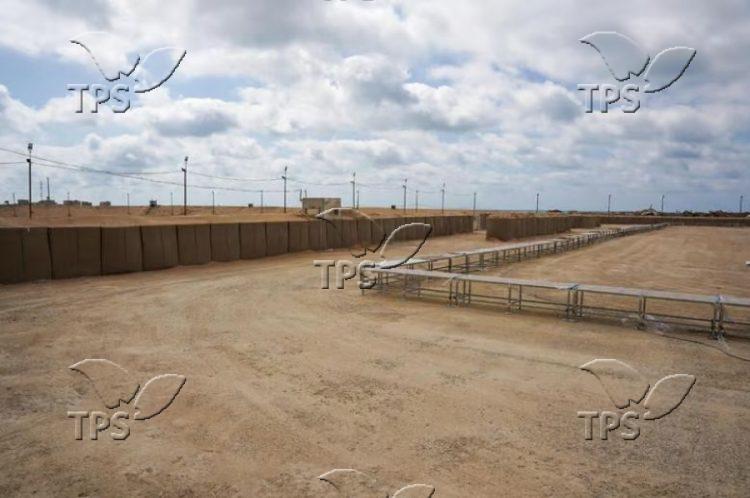
GHF began operations in Gaza on Monday, sending truckloads of supplies to several secure distribution compounds. A spokesperson said more shipments were en route and promised that the volume of aid would increase daily, though the foundation did not specify exact quantities. Photographs shared by the group showed Gazans collecting the boxes at the sites.
The aid program was conceived by Israel in response to what it sees as repeated failures by the UN and other international bodies to prevent Hamas from intercepting humanitarian supplies. In this new model, only pre-selected family representatives are allowed to access the centers, where they pick up heavy boxes of food in controlled, American-secured zones. The approach marks a shift from the bulk distribution methods previously used, which Israeli officials argue have made it easier for Hamas to seize aid.
“This is a new model,” GHF said. “It’s designed to prevent diversion of aid and build trust directly with the people.”
According to the American security company overseeing logistics, the first distribution began at 9:30 a.m. Tuesday. The company claimed that Hamas tried to block access by setting up a checkpoint, but crowds eventually breached it. By 2:40 p.m., 400 heads of households had collected food packages meant to feed approximately 2,500 people, and thousands more were reportedly gathering outside the facility.
GHF issued a statement condemning Hamas for attempting to obstruct the effort. “It is clear that Hamas is threatened by this new operating model and will do everything in its power to see it fail,” the foundation said, adding that aid groups working with GHF have received death threats.
Meanwhile, the Israel Defense Forces confirmed that four aid distribution sites have been established across Gaza in recent weeks, operated by international organizations and secured by American civilian contractors. On Tuesday, two centers began operating in Tel al-Sultan and the Morag corridor near Rafah. Each site is expected to serve around 300,000 people.
The system is intentionally minimalist. Recipients do not need to register or pass inspections, an approach GHF says is meant to foster trust despite the potential for abuse, such as individuals collecting aid multiple times. Boxes are laid out on long tables, echoing familiar holiday food drives in the hopes of avoiding scenes of chaos. Each compound is surrounded by high earthen berms and monitored from the air by the IDF, though no Israeli soldiers are present on the ground. The IDF is relying on aerial surveillance and intelligence to ensure the distribution centers’ security.
The distribution centers will operate continuously, and dozens of aid trucks are expected to arrive daily. While the effort remains controversial, particularly due to its bypassing of the United Nations Relief and Works Agency (UNRWA) for Palestinian refugees, its backers hope it will offer a more secure and transparent means of delivering humanitarian assistance.
Since mid-November, Hamas and criminal gangs associated with the terror group have hijacked around 85% of all the trucks entering the Strip carrying food, water, medicine and other humanitarian items. The Press Service of Israel has learned that Hamas has granted distribution lines to these groups to ensure that humanitarian aid exclusively reaches Hamas. In return, these gangs receive money, food and vouchers. Hamas also pays these gangs $10,000 a month to maintain checkpoints.
At least 1,180 people were killed, and 252 Israelis and foreigners were taken hostage in Hamas’s attacks on Israeli communities near the Gaza border on October 7. Of the 59 remaining hostages, 36 are believed to be dead.