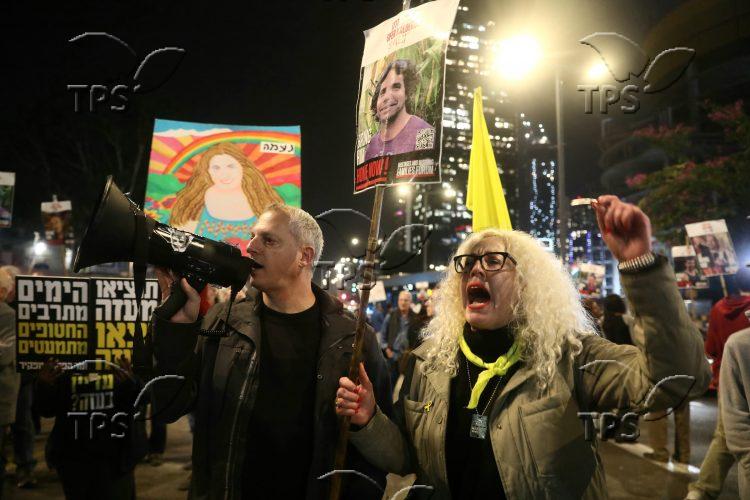
Photo by
Gideon Markowicz/TPS-IL on 15 January, 2025
Ceasefire Reached But Israel Says ‘Details Have Yet to Be Finalized’
Jerusalem, 15 January, 2025 (TPS-IL) -- Ending days of speculation, Israel and Hamas agreed to a ceasefire and hostage release deal with news of it being broken by US President-elect Donald Trump on Wednesday afternoon. However, Prime Minister Benjamin Netanyahu’s office said that details were still being worked out.
“Due to the strong insistence of Prime Minister Benjamin Netanyahu, Hamas folded on its last-minute demand to change the deployment of IDF forces in the Philadelphi Corridor. However, several items in the framework have yet to be finalized; we hope that the details will be finalized tonight,” Netanyahu’s office said on Wednesday evening.
The phased nature of the hostage release has raised concerns that not all hostages will be returned. Only 33 captives — women, children, elderly and the sick — will come home in the first stage.
“We share this news cautiously, with a mix of anticipation, excitement, and an unwavering commitment to our cause: it was announced that a deal has been approved by all parties in Doha, with details to be shared in the coming days,” the Hostages and Missing Families Forum said in a statement.
“There will still be hostages we must continue to fight for. The entire world now knows: we will stand by the families until they are ALL home,” the Forum added.
The Israeli Cabinet is expected to meet on Thursday morning to approve the agreement.
During the ceasefire’s first phase, Israeli forces will redeploy from Gaza population centers, and Palestinians who fled their homes in the Strip’s northern areas will be allowed to return.
In addition, Israel would begin releasing Palestinian security prisoners and facilitating more humanitarian aid deliveries.
It is also understood that on day 16 of the ceasefire, talks will begin over the next round of hostages to be released, army redeployments and security protocols for Palestinian prisoners returning to Gaza.
The first phase would last 42 days, and if the ceasefire does not collapse, further Israeli hostages and Palestinian security prisoners would be released and along with additional military redeployments.
Phase three would see the release of the final hostages, followed by an Israeli withdrawal from Gaza.
Supporters of the agreement say it is the last chance to bring hostages home alive. Critics say the phased approach condemns hostages not freed in the beginning to open-ended captivity and undermines Israel’s war gains.
Col. (Res.) Hezi Nechama told The Press Service of Israel that while saving the lives of captives may justify these risks, such decisions be made with full awareness of the price.
“If we go back to fighting, the costs will be heavy, unless we abandon the idea of fighting Hamas altogether, which means conceding our objectives,” said Nechama, one of the founders of the Forum of Reservist Commanders and Fighters.
At least 1,200 people were killed, and 252 Israelis and foreigners were taken hostage in Hamas’s attacks on Israeli communities near the Gaza border on October 7. Of the 95 remaining hostages, more than 30 have been declared dead. Hamas has also been holding captive two Israeli civilians since 2014 and 2015, and the bodies of two soldiers killed in 2014.